Best AI tools for students in 2026
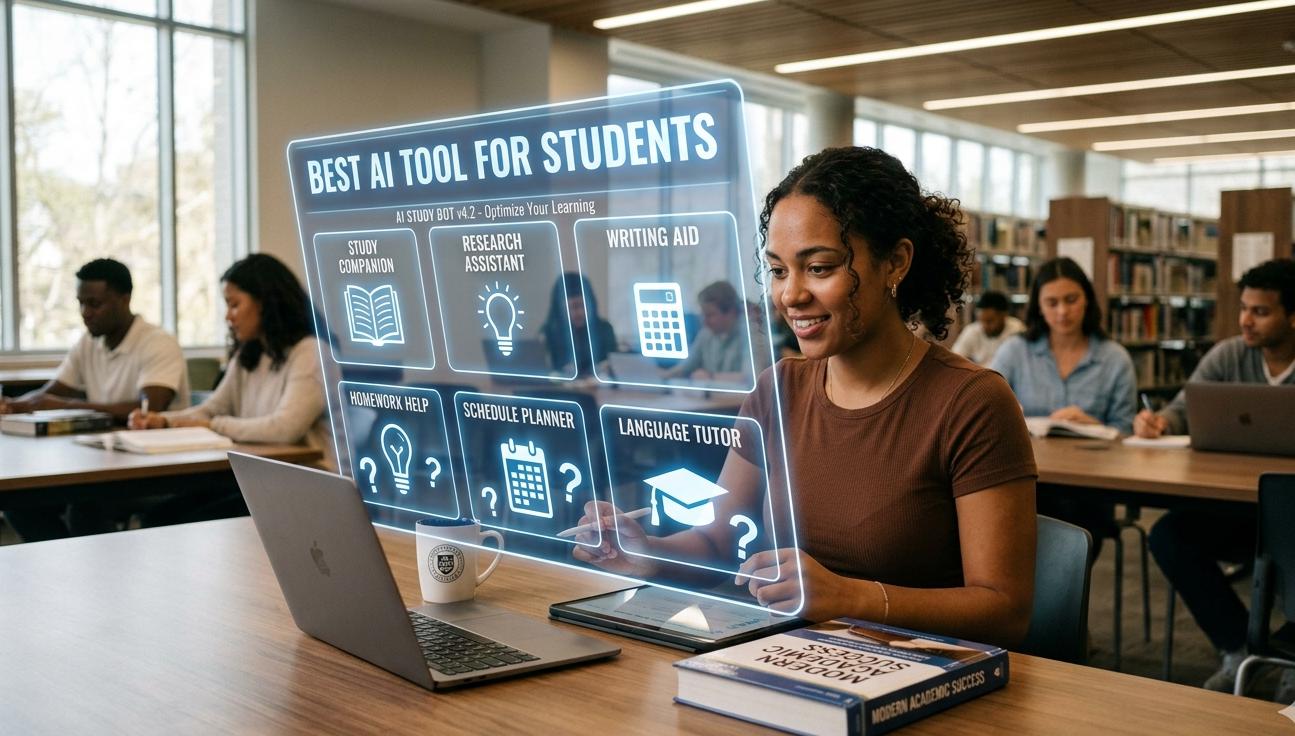
Artificial Intelligence (AI) has transformed education in ways that were unimaginable just a few years ago. In 2026, students will have access to a wide range of AI-powered tools that can help them study smarter, complete assignments faster, improve writing skills, conduct research efficiently, and stay organized throughout their academic journey.
Whether you’re a high school student preparing for exams, a college student working on research papers, or a lifelong learner developing new skills, AI tools can significantly enhance productivity and learning outcomes.
These tools are not meant to replace critical thinking or academic effort. Instead, they serve as intelligent assistants that help students save time, understand complex topics, and focus on meaningful learning.
This article explores the best AI tools for students in 2026, their features, benefits, and how they can be used effectively in education.
Why Students Are Using AI More Than Ever
The educational landscape has become increasingly competitive. Students are expected to manage assignments, projects, presentations, exams, and extracurricular activities simultaneously.
AI tools help students by:
- Improving study efficiency
- Simplifying difficult concepts
- Enhancing writing quality
- Organizing notes and research
- Managing schedules and tasks
- Providing personalized learning support
- Saving valuable time
As AI technology continues to improve, these tools are becoming essential components of modern education.
1. ChatGPT
ChatGPT remains one of the most versatile AI tools available to students in 2026. It serves as a personal tutor, writing assistant, brainstorming partner, and research helper.
Key Features
- Answers academic questions
- Explains difficult concepts
- Assists with essay writing
- Generates study guides
- Creates summaries
- Helps with coding assignments
- Supports multiple subjects
Best For
- Homework assistance
- Exam preparation
- Research support
- Writing assignments
Benefits
Students can receive instant explanations for topics ranging from mathematics and science to literature and history.
2. Grammarly
Writing remains a critical academic skill, and Grammarly continues to be one of the most useful AI-powered writing assistants.
Key Features
- Grammar correction
- Spelling checks
- Style suggestions
- Tone analysis
- Citation assistance
- Clarity improvements
Best For
- Essays
- Research papers
- Emails
- Reports
Benefits
Grammarly helps students produce polished and professional academic writing.
3. Notion AI
Notion AI has become a favorite productivity tool among students.
Key Features
- Note-taking assistance
- Content summarization
- Task management
- Study planning
- Project organization
Best For
- Class notes
- Assignment tracking
- Semester planning
Benefits
Students can keep all academic information organized in one place.
4. Perplexity AI
Research is one of the most time-consuming academic tasks. Perplexity AI helps students find information quickly while providing source references.
Key Features
- AI-powered search
- Source citations
- Research summaries
- Follow-up questioning
Best For
- Academic research
- Fact checking
- Literature reviews
Benefits
Students can gather reliable information more efficiently than traditional search engines alone.
5. Quizlet AI
Quizlet has evolved significantly with AI-powered learning features.
Key Features
- AI-generated flashcards
- Practice tests
- Personalized learning plans
- Study recommendations
Best For
- Exam preparation
- Memorization
- Language learning
Benefits
Students can convert notes into interactive study materials instantly.
6. Otter.ai
Taking notes during lectures can be challenging. Otter.ai helps students capture information automatically.
Key Features
- Real-time transcription
- Lecture recording
- Meeting summaries
- Searchable notes
Best For
- Online classes
- Lectures
- Group discussions
Benefits
Students can focus on listening rather than writing every detail.
7. Canva AI
Presentations and visual projects are common academic requirements.
Key Features
- AI-generated designs
- Presentation templates
- Image generation
- Infographic creation
Best For
- School presentations
- Posters
- Project reports
Benefits
Students can create professional-quality visuals without advanced design skills.
8. Wolfram Alpha
For students studying mathematics, engineering, and science, Wolfram Alpha remains invaluable.
Key Features
- Step-by-step solutions
- Mathematical calculations
- Scientific data
- Formula explanations
Best For
- Mathematics
- Physics
- Engineering
- Statistics
Benefits
Students gain a deeper understanding of problem-solving methods.
9. Elicit
Research papers often require extensive literature reviews.
Key Features
- Academic paper search
- Research summaries
- Evidence extraction
- Literature review assistance
Best For
- University students
- Researchers
- Graduate studies
Benefits
Students can analyze research papers much faster.

10. GitHub Copilot
Programming students benefit greatly from GitHub Copilot.
Key Features
- Code suggestions
- Bug detection
- Programming explanations
- Multiple language support
Best For
- Computer science students
- Coding assignments
- Software projects
Benefits
Students can learn coding concepts while improving productivity.
11. Duolingo Max AI
Language learning has become more interactive thanks to AI.
Key Features
- Personalized lessons
- Conversation practice
- Instant feedback
- Pronunciation correction
Best For
- Language students
- Travelers
- Self-learners
Benefits
AI provides a more immersive learning experience.
12. Khan Academy’s AI Tutor
Educational platforms now integrate AI tutoring systems.
Key Features
- Personalized explanations
- Practice exercises
- Learning recommendations
- Subject-specific guidance
Best For
- School students
- Exam preparation
- STEM subjects
Benefits
Students receive one-on-one learning support at any time.
How AI Improves Student Productivity
- Faster Research
- AI tools can summarize articles, locate sources, and answer research questions in seconds.
- Better Organization
- Students can manage schedules, assignments, and notes more effectively.
- Improved Writing
- AI writing assistants help eliminate grammar mistakes and improve clarity.
- Personalized Learning
- AI adapts to individual learning styles and needs.
- Enhanced Understanding
- Complex concepts become easier to understand through AI-generated explanations.
Responsible Use of AI in Education
While AI offers many advantages, students should use these tools responsibly.
- Use AI as a Learning Assistant
- AI should support learning rather than replace it.
- Verify Information
- Always double-check facts and sources.
- Avoid Academic Dishonesty
- Do not submit AI-generated work as entirely your own if prohibited by your institution.
- Develop Critical Thinking
- Students should evaluate AI-generated answers rather than accepting them blindly.
Tips for Choosing the Right AI Tool
Before selecting an AI tool, consider:
- Your Academic Needs
- Different tools serve different purposes.
- Budget
- Many AI tools offer free plans, while premium versions provide advanced features.
- Ease of Use
- Choose tools with intuitive interfaces.
- Privacy
- Review data privacy policies before sharing sensitive information.
- Device Compatibility
- Ensure the tool works across your preferred devices.
Future of AI in Education
The role of AI in education is expected to grow significantly over the coming years.
Future developments may include:
- Personalized AI tutors
- Virtual classrooms
- Real-time learning analytics
- Adaptive educational content
- Advanced language translation
- Intelligent career guidance
As technology evolves, students who learn to use AI effectively will gain significant academic advantages.
Common Mistakes Students Make When Using AI
- Relying Entirely on AI
- Students should not depend solely on AI-generated answers.
- Skipping Fact Checking
- AI can occasionally provide inaccurate information.
- Ignoring Learning Opportunities
- Using AI to complete tasks without understanding concepts defeats the purpose of education.
- Overlooking Privacy Concerns
- Avoid sharing confidential personal information with AI tools.
- Using Outdated AI Tools
- Technology changes rapidly, so students should stay updated on the latest options.
Read more: AI for Students
FAQs
1. What is the best AI tool for students in 2026?
ChatGPT is often considered one of the best all-around AI tools because it helps with studying, writing, research, and problem-solving.
2. Are AI tools free for students?
Many AI tools offer free plans, though premium features may require a subscription.
3. Can AI help students improve grades?
AI can support learning, organization, and productivity, which may contribute to better academic performance.
4. Is it ethical to use AI for homework?
Using AI for learning and guidance is generally acceptable, but submitting AI-generated work without permission may violate academic policies.
5. Which AI tool is best for writing essays?
Grammarly and ChatGPT are among the most popular tools for essay writing and editing.
6. What AI tool is best for research?
Perplexity AI and Elicit are excellent choices for academic research and literature reviews.
7. Can AI replace teachers?
No. AI can assist learning, but teachers provide mentorship, feedback, and human interaction that AI cannot fully replace.
8. Which AI tool is best for math students?
Wolfram Alpha is one of the best tools for solving and understanding mathematical problems.
9. Is AI safe for students?
Generally yes, but students should review privacy policies and avoid sharing sensitive personal information.
10. Will AI become more important in education?
Yes. AI is expected to play an increasingly significant role in personalized learning, tutoring, and educational support.
Conclusion
AI tools have become essential educational companions in 2026. From writing assistants and research platforms to coding helpers and language tutors, these technologies are transforming how students learn, study, and succeed academically.
Tools such as ChatGPT, Grammarly, Notion AI, Perplexity AI, Quizlet AI, Otter.ai, Canva AI, Wolfram Alpha, Elicit, GitHub Copilot, Duolingo Max AI, and Khan Academy’s AI Tutor offer powerful capabilities that can improve productivity and learning outcomes.
The most successful students will not be those who simply use AI, but those who learn how to use it wisely. By combining AI-powered assistance with critical thinking, creativity, and hard work, students can unlock their full academic potential and prepare themselves for a future shaped by intelligent technology.