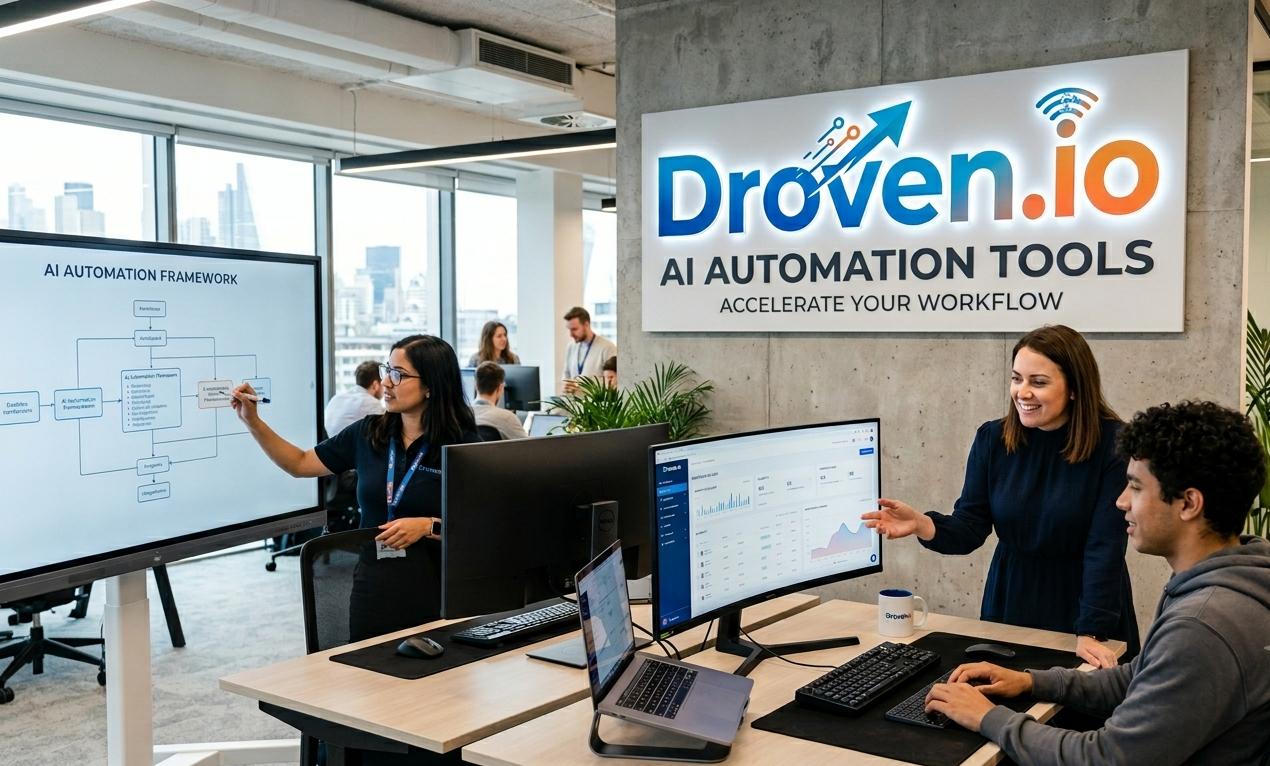
Droven.io AI Automation Tools: The Complete Guide for Businesses in 2026
Artificial Intelligence (AI) is changing the way businesses operate. From customer support and marketing to data analysis and workflow management, AI-powered automation tools are helping organizations save time, reduce costs, and improve productivity.
Among the growing number of AI-focused platforms, Droven.io has gained attention for its educational content and discussions around AI automation, digital transformation, and business efficiency. The platform focuses on explaining how AI tools can streamline operations and help businesses adapt to the future of work.
In this guide, we will explore Droven.io AI automation tools, their features, benefits, applications, challenges, and future potential. Whether you are a business owner, marketer, entrepreneur, or technology enthusiast, this article will help you understand how AI automation can transform modern workflows.
What Is Droven.io?
Droven.io is a technology and AI-focused platform that publishes educational content about artificial intelligence, automation, machine learning, digital transformation, software development, and future technologies. The platform aims to simplify complex concepts and make them accessible to both technical and non-technical audiences.
Rather than functioning primarily as a software vendor, Droven.io serves as a knowledge hub where readers can learn about:
- AI tools
- Business automation
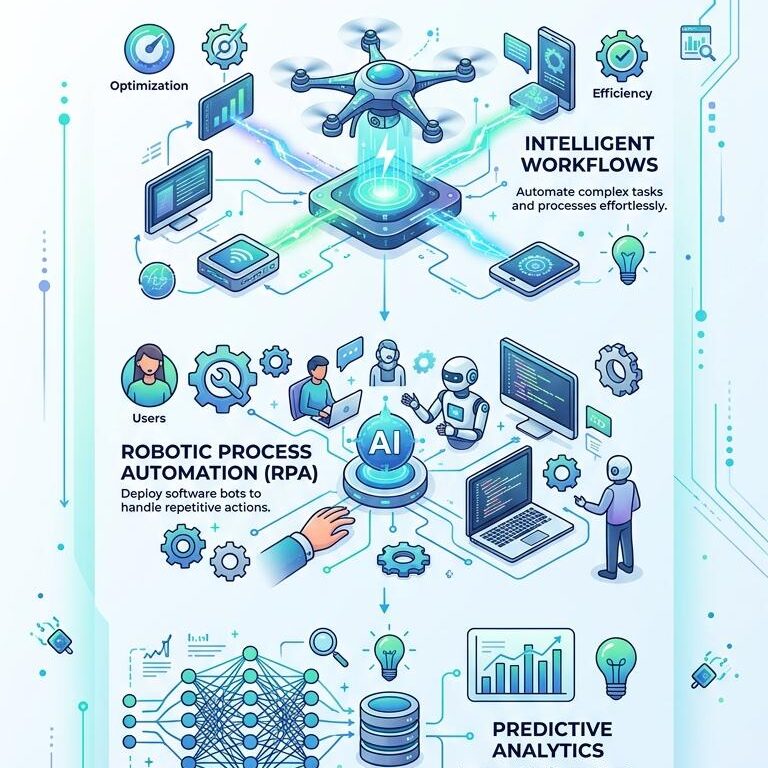
- Robotic Process Automation (RPA)
- Machine learning
- Generative AI
- Future technology trends
- Digital transformation strategies
Its growing popularity reflects the increasing demand for practical information about AI and automation.
Understanding AI Automation
AI automation combines artificial intelligence with automated workflows to perform tasks that traditionally require human effort.
Unlike basic automation systems that follow fixed rules, AI-powered systems can:
- Learn from data
- Identify patterns
- Make recommendations
- Improve over time
- Handle complex decision-making processes
Examples include:
- AI chatbots
- Automated marketing campaigns
- Predictive analytics
- Customer service automation
- Smart document processing
- Inventory management systems
Businesses use these technologies to improve efficiency and stay competitive in rapidly evolving markets.
Why Businesses Need AI Automation
Modern organizations face several challenges:
- Increasing Competition
- Businesses must respond quickly to market changes and customer demands.
- Rising Labor Costs
- Manual processes consume time and resources.
- Large Data Volumes
- Organizations generate enormous amounts of data daily.
- Customer Expectations
- Customers expect fast and personalized experiences.
- Operational Complexity
- As businesses grow, managing workflows becomes increasingly difficult.
- AI automation helps solve these problems by reducing manual work and improving operational efficiency.
Key Features of Droven.io AI Automation Tools
1. Workflow Automation
One of the most important aspects discussed in Droven.io content is workflow automation.
AI can automate repetitive business processes such as:
- Data entry
- Report generation
- Customer onboarding
- Appointment scheduling
- Order processing
Automated workflows eliminate repetitive tasks and improve consistency.
2. Intelligent Decision-Making
AI systems analyze data and provide actionable insights.
Businesses can use AI to:
- Predict customer behavior
- Forecast sales
- Optimize pricing
- Detect anomalies
- Improve business strategies
This allows organizations to make better decisions based on real-time information rather than assumptions.
3. Real-Time Analytics
AI-powered dashboards provide instant visibility into business performance.
Benefits include:
- Faster reporting
- Better monitoring
- Improved forecasting
- Enhanced performance tracking
Managers can identify opportunities and problems before they become serious issues.
4. Customer Support Automation
Customer support is one of the most common applications of AI.
Examples include:
- AI chatbots
- Automated ticket routing
- FAQ systems
- Sentiment analysis
These tools improve response times and provide 24/7 support without increasing staffing costs.
5. Integration Capabilities
Modern AI solutions integrate with existing business tools such as:
- CRM platforms
- Marketing software
- E-commerce systems
- Accounting applications
- Communication tools
Integration ensures smooth data flow across departments and reduces manual transfers.
6. Custom Automation Rules
Every business has unique requirements.
AI automation platforms often allow users to create custom rules that match their workflows, making automation more flexible and scalable.
Benefits of Droven.io AI Automation Tools
Increased Productivity
Automation handles repetitive tasks, allowing employees to focus on strategic work.
Workers spend less time on routine activities and more time on innovation and growth.
Reduced Operational Costs
AI can perform tasks faster and more accurately than manual processes.
This leads to:
- Lower labor costs
- Reduced errors
- Improved efficiency
- Better resource allocation
Improved Accuracy
Human errors can be costly.
AI systems process data consistently and reduce mistakes in:
- Financial records
- Customer information
- Reporting
- Inventory management
Faster Decision-Making
Real-time analytics enable organizations to react quickly to changing conditions.
Businesses gain a competitive advantage through faster insights and responses.
Better Customer Experience
Customers benefit from:
- Faster responses
- Personalized recommendations
- Consistent support
- Improved service quality
Higher satisfaction often leads to stronger customer loyalty.
Scalability
As businesses grow, AI automation can handle increasing workloads without requiring proportional increases in staffing.
This makes growth more sustainable and cost-effective.
Real-World Applications of AI Automation
Marketing Automation
Marketing teams use AI to:
- Create personalized campaigns
- Segment audiences
- Schedule content
- Analyze campaign performance
- Generate leads
AI helps marketers reach the right audience at the right time.
Sales Automation
Sales departments benefit from:
- Lead scoring
- CRM updates
- Follow-up reminders
- Sales forecasting
- Customer insights
Automation allows sales representatives to focus on closing deals.
E-Commerce
Online retailers use AI for:
- Product recommendations
- Inventory management
- Customer support
- Order processing
- Fraud detection
These capabilities improve customer satisfaction and increase revenue.
Finance and Accounting
Financial teams automate:
- Invoice processing
- Expense tracking
- Budget forecasting
- Compliance monitoring
- Financial reporting
This improves accuracy and reduces administrative work.
Human Resources
HR departments use AI for:
- Resume screening
- Employee onboarding
- Attendance management
- Performance tracking
- Recruitment automation
AI speeds up hiring and improves workforce management.
Healthcare
Healthcare organizations use AI for:
- Patient scheduling
- Medical documentation
- Data analysis
- Diagnostic support
- Administrative automation
These applications help improve patient care while reducing workload.
AI Automation vs Traditional Automation
| Feature | Traditional Automation | AI Automation |
| Learning Ability | No | Yes |
| Decision Making | Rule-Based | Intelligent |
| Adaptability | Limited | High |
| Data Analysis | Basic | Advanced |
| Predictive Capabilities | No | Yes |
| Continuous Improvement | No | Yes |
AI automation provides greater flexibility and intelligence compared to traditional automation systems.
The Role of RPA in AI Automation
Robotic Process Automation (RPA) is frequently discussed alongside AI.
RPA uses software robots to perform repetitive digital tasks such as:
- Data entry
- Form processing
- File transfers
- System updates
When combined with AI, RPA becomes more powerful because it can:
- Understand unstructured data
- Make decisions
- Learn from outcomes
- Handle exceptions
This combination creates intelligent automation solutions.
Challenges of AI Automation
Despite its advantages, AI automation comes with challenges.
Initial Setup Costs
Implementing AI solutions may require investments in:
- Software
- Training
- Infrastructure
- Integration
Learning Curve
Employees may need training to understand and manage AI-powered systems.
- Data Quality Issues
- AI systems depend on accurate data.
- Poor-quality data can produce inaccurate results.
- Security Concerns
- Organizations must protect sensitive information when implementing AI solutions.
- Strong cybersecurity practices are essential.
- Overdependence on Automation
- Businesses should maintain human oversight to ensure critical decisions remain accurate and ethical.
Future Trends in AI Automation
The future of AI automation looks promising.
- Hyperautomation
- Organizations will automate increasingly complex workflows.
- Generative AI Integration
- AI will create content, reports, code, and marketing materials automatically.
- Predictive Intelligence
- Businesses will rely more on AI-driven forecasting.
- AI Agents
- Autonomous AI agents will manage tasks with minimal human intervention.
- Improved Human-AI Collaboration
- Rather than replacing humans, AI will enhance human productivity and decision-making.
- These trends are expected to reshape industries over the coming years.
How Businesses Can Get Started
Step 1: Identify Repetitive Tasks
Find processes that consume significant time and resources.
Step 2: Define Goals
Determine whether the objective is:
- Cost reduction
- Productivity improvement
- Customer satisfaction
- Revenue growth
Step 3: Evaluate Tools
Research AI automation platforms and solutions.
Step 4: Start Small
Begin with one process before scaling automation across the organization.
Step 5: Monitor Results
Measure performance and continuously optimize workflows.
Frequently Asked Questions (FAQs)
1. What is Droven.io?
Droven.io is an educational platform that publishes content about AI, automation, digital transformation, and emerging technologies.
2. Does Droven.io provide AI software?
Its primary focus is educational content and technology insights rather than directly selling automation software.
3. What are AI automation tools?
AI automation tools use artificial intelligence to automate workflows, analyze data, and improve business processes.
4. How do AI automation tools improve productivity?
They reduce repetitive work, minimize errors, and allow employees to focus on strategic tasks.
5. Can small businesses benefit from AI automation?
Yes. Small businesses can use AI for marketing, customer support, sales, and operational efficiency.
6. What industries use AI automation?
Healthcare, finance, retail, marketing, education, manufacturing, and many other industries.
7. What is the difference between AI automation and RPA?
RPA follows predefined rules, while AI automation can learn, adapt, and make intelligent decisions.
8. Is AI automation expensive?
Costs vary depending on the solution, but many businesses achieve significant long-term savings.
9. Are AI automation tools secure?
Most modern platforms include security features, but businesses should implement proper cybersecurity measures.
10. What is the future of AI automation?
Future developments include hyperautomation, AI agents, predictive analytics, and deeper integration across business operations.
Conclusion
Droven.io has become a valuable resource for understanding AI automation, digital transformation, and modern business technology. Through educational content and practical insights, it helps organizations and individuals understand how AI can improve productivity, reduce costs, and streamline operations.
As AI continues to evolve, automation will become a core component of successful businesses. Companies that embrace intelligent automation today will be better positioned to compete, innovate, and grow in the future.