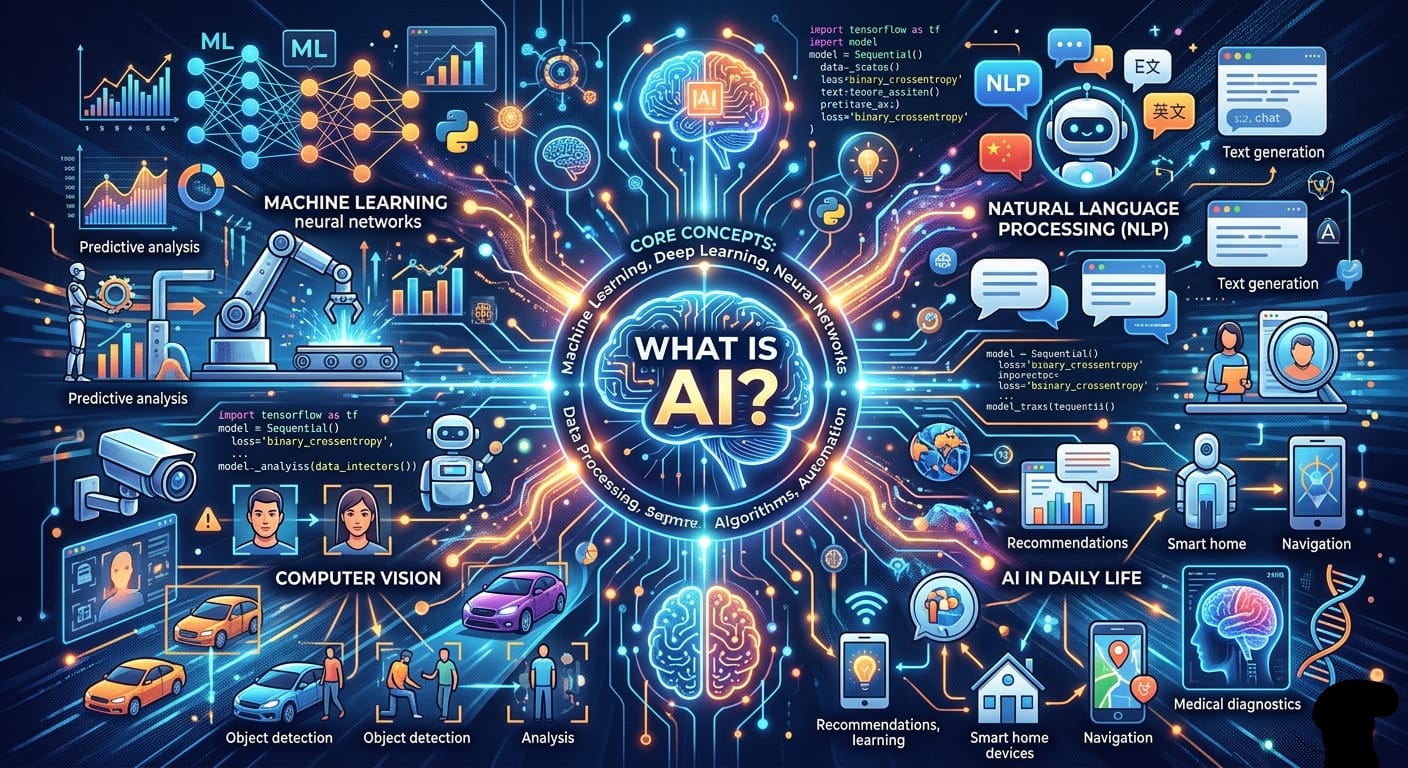
What Is AI?
Artificial Intelligence (AI) is one of the most transformative technologies of the modern era. From smartphones and virtual assistants to self-driving cars and advanced medical systems, AI is reshaping how people live, work, and interact with technology.
In 2026, AI has become an essential part of daily life, helping businesses improve efficiency, supporting scientific discoveries, and enhancing user experiences across countless industries.
But what exactly is AI? How does it work? Why is it so important, and what does the future hold for this revolutionary technology? What is AI? A beginner-friendly guide to Artificial Intelligence, its applications, benefits, challenges, and future developments.
This comprehensive guide explains everything you need to know about Artificial Intelligence, including its history, types, applications, benefits, challenges, and future potential.
What Is AI?
Artificial Intelligence (AI) refers to the simulation of human intelligence in machines. These machines are designed to perform tasks that typically require human thinking, such as learning, problem-solving, reasoning, decision-making, understanding language, and recognizing patterns.
In simple terms, AI enables computers and software systems to think and act intelligently.
For example, when a virtual assistant answers your questions, a recommendation system suggests movies you might enjoy, or a navigation app finds the fastest route, AI is working behind the scenes.
AI systems can process massive amounts of data, identify patterns, learn from experience, and improve their performance over time.
The History of Artificial Intelligence
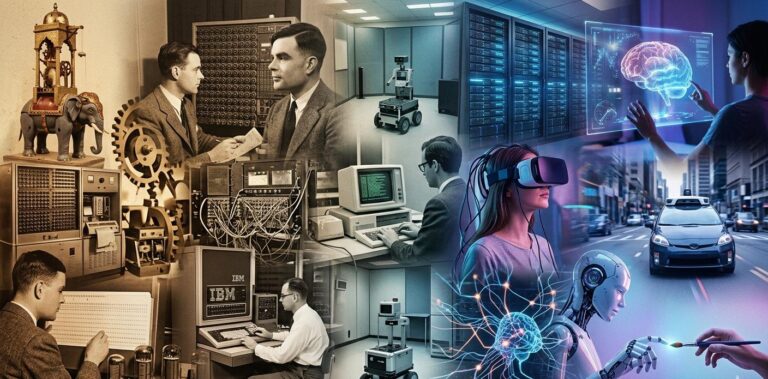
The concept of intelligent machines has existed for centuries, but modern AI development began in the 20th century.
Early Concepts
Ancient myths and stories often described artificial beings capable of human-like actions. However, practical AI research started much later.
The Birth of AI
In 1956, computer scientist John McCarthy coined the term “Artificial Intelligence” during a conference at Dartmouth College.
Researchers believed machines could eventually mimic human intelligence through computation.
AI Winters
Despite early optimism, progress slowed during periods known as “AI winters,” when funding and interest declined because technology could not meet expectations.
Modern AI Revolution
Advances in computing power, big data, cloud computing, and machine learning reignited AI development in the 2000s and beyond.
Today, AI powers many of the world’s most innovative technologies.
How Does AI Work?
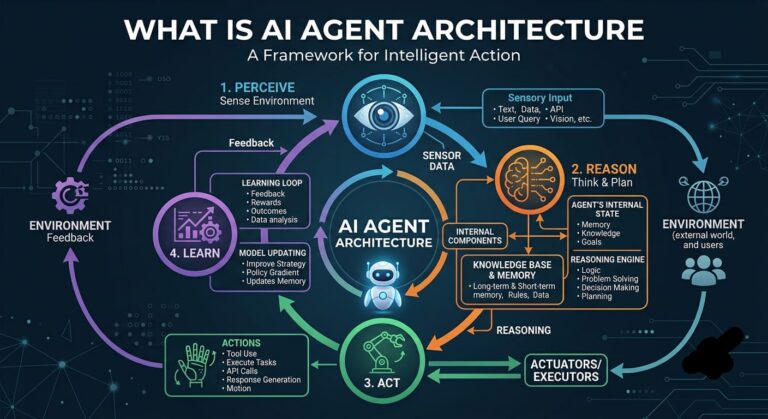
AI works by combining data, algorithms, and computing power.
Data Collection
AI systems require large amounts of information to learn patterns and relationships.
Examples include:
- Images
- Videos
- Text documents
- Audio recordings
- User behavior data
Training
Machine learning algorithms analyze data and identify patterns.
For example, an AI trained on thousands of cat images learns to recognize cats in new pictures.
Decision Making
Once trained, the AI uses its learned knowledge to make predictions, recommendations, or decisions.
Continuous Improvement
Many AI systems continue learning from new data, improving accuracy and performance over time.
Types of Artificial Intelligence
AI can be categorized into several types based on capability and functionality.
1. Narrow AI
Also known as Weak AI, Narrow AI performs specific tasks.
Examples include:
- Voice assistants
- Recommendation systems
- Spam filters
- Translation software
Most AI used today falls into this category.
2. General AI
General AI refers to machines that can understand and perform any intellectual task a human can do.
This level of AI has not yet been achieved.
3. Super AI
Super AI is a theoretical concept where machines surpass human intelligence in every field.
Currently, Super AI remains speculative.
Key Technologies Behind AI
Several technologies contribute to modern AI systems.
Machine Learning
Machine learning allows computers to learn from data without explicit programming.
It is one of the most important branches of AI.
Deep Learning
Deep learning uses neural networks inspired by the human brain.
It powers:
- Image recognition
- Speech recognition
- Natural language processing
Natural Language Processing (NLP)
NLP enables machines to understand and generate human language.
Applications include:
- Chatbots
- Translation tools
- Voice assistants
Computer Vision
Computer vision helps machines analyze and interpret visual information.
Examples include:
- Facial recognition
- Medical imaging
- Autonomous vehicles
Robotics
AI-powered robots perform physical tasks in manufacturing, healthcare, and logistics.
Common Applications of AI
AI is now integrated into many aspects of daily life.
- Virtual Assistants
- Digital assistants can answer questions, set reminders, and perform various tasks.
- Search Engines
- AI helps search engines understand user intent and deliver relevant results.
- Social Media
- Platforms use AI to personalize feeds and recommend content.
Online Shopping
E-commerce companies use AI for:
- Product recommendations
- Inventory management
- Customer support
Healthcare
AI assists doctors with diagnosis, treatment planning, and medical research.
Banking and Finance
Financial institutions use AI for:
- Fraud detection
- Risk assessment
- Automated trading
Education
AI supports personalized learning experiences and intelligent tutoring systems.
Transportation
Self-driving technology relies heavily on AI for navigation and safety.
Benefits of Artificial Intelligence
AI offers numerous advantages across industries.
- Increased Efficiency
- AI can automate repetitive tasks, allowing humans to focus on higher-value work.
- Improved Accuracy
- Machines can process information with fewer errors than humans in certain situations.
- Faster Decision-Making
- AI analyzes vast datasets quickly, helping organizations make informed decisions.
- Cost Savings
- Automation reduces labor costs and increases productivity.
- 24/7 Availability
- AI systems can operate continuously without breaks.
- Better Customer Experiences
- AI-powered tools provide personalized recommendations and support.
Challenges and Risks of AI
Despite its benefits, AI also presents challenges.
- Job Displacement
- Automation may reduce demand for some jobs while creating new opportunities.
- Data Privacy Concerns
- AI often relies on large amounts of personal data.
- Bias and Fairness
- Biased training data can lead to unfair outcomes.
- Security Risks
- Cybercriminals may misuse AI technologies.
- Lack of Transparency
- Some AI systems make decisions that are difficult to explain.
- Ethical Issues
- Questions remain about responsible AI development and usage.
AI in Business
Businesses across industries use AI to improve operations and competitiveness.
Marketing
AI helps businesses:
- Analyze customer behavior
- Personalize campaigns
- Generate content
Customer Service
- Chatbots provide instant assistance and reduce support costs.
Human Resources
- AI assists with recruitment and employee management.
Supply Chain Management
- Companies use AI to forecast demand and optimize logistics.
Sales
- AI helps identify leads and predict customer purchasing behavior.
AI in Healthcare
- Healthcare is one of the industries benefiting most from AI.
Disease Detection
- AI can identify patterns in medical scans and test results.
Drug Discovery
- Researchers use AI to accelerate pharmaceutical development.
Personalized Medicine
- AI helps tailor treatments to individual patients.
Remote Monitoring
- Smart devices can monitor health conditions in real time.
AI in Education
Educational institutions increasingly rely on AI tools.
Benefits include:
- Personalized learning
- Automated grading
- Virtual tutoring
- Learning analytics
- Accessibility improvements
AI can help students learn more effectively while reducing administrative workloads.
AI and Creativity
Contrary to early assumptions, AI can also support creative work.
Examples include:
- Writing assistance
- Music generation
- Graphic design
- Video creation
- Image generation
AI acts as a creative partner rather than replacing human imagination.
The Future of Artificial Intelligence
AI continues to evolve rapidly.
Future developments may include:
- Smarter Virtual Assistants
- Assistants will become more conversational and context-aware.
- Advanced Robotics
- Robots may perform increasingly complex physical tasks.
- Improved Healthcare
- AI could help diagnose diseases earlier and improve treatment outcomes.
- Autonomous Transportation
- Self-driving vehicles may become more widespread.
- Scientific Discoveries
- AI may accelerate breakthroughs in medicine, energy, and environmental research.
- Personalized Experiences
- Products and services will become increasingly customized.
Will AI Replace Humans?
One of the most common questions about AI is whether it will replace humans.
While AI can automate many tasks, it is unlikely to replace human creativity, empathy, leadership, and critical thinking entirely.
Instead, AI is expected to augment human capabilities.
People who learn to work alongside AI will likely benefit the most from future technological advancements.
How to Learn AI
If you’re interested in AI, consider these learning steps:
- Understand basic computer concepts.
- Learn programming languages such as Python.
- Study mathematics and statistics.
- Explore machine learning fundamentals.
- Build simple AI projects.
- Take online courses.
- Practice with AI tools and platforms.
Continuous learning is essential because AI evolves rapidly.
Frequently Asked Questions (FAQs)
1. What does AI stand for?
AI stands for Artificial Intelligence, the simulation of human intelligence in machines.
2. How does AI learn?
AI learns by analyzing data, identifying patterns, and improving its performance through algorithms.
3. What is the difference between AI and machine learning?
AI is the broader concept of intelligent machines, while machine learning is a subset of AI that allows systems to learn from data.
4. Is AI dangerous?
AI itself is not inherently dangerous, but misuse, bias, and poor implementation can create risks.
5. Can AI think like humans?
Current AI cannot think exactly like humans. It can process information and perform tasks but lacks true consciousness.
6. Where is AI used today?
AI is used in healthcare, finance, education, transportation, marketing, entertainment, and many other industries.
7. Will AI replace jobs?
AI may automate some jobs while creating new roles that require human oversight and expertise.
8. What skills are needed to learn AI?
Programming, mathematics, statistics, data analysis, and problem-solving skills are helpful for learning AI.
9. What is Generative AI?
Generative AI creates new content such as text, images, videos, music, and code based on user prompts.
10. What is the future of AI?
The future of AI includes smarter automation, improved healthcare, advanced robotics, personalized experiences, and accelerated scientific discoveries.
Conclusion
Artificial Intelligence is one of the most influential technologies of the 21st century. It enables machines to perform tasks that traditionally required human intelligence, transforming industries ranging from healthcare and education to finance and transportation.
As AI continues advancing, its impact on society will only grow. While challenges such as ethics, privacy, and job displacement require careful attention, the opportunities offered by AI are immense.
Understanding AI is no longer optional for many professionals and businesses. Whether you’re a student, entrepreneur, or technology enthusiast, learning about Artificial Intelligence can help you prepare for a future increasingly shaped by intelligent machines.