AI Tools for Exam Preparation: The Ultimate Guide for Students
Exams are an important part of every student’s academic journey. Whether preparing for school tests, university entrance exams, professional certifications, or competitive examinations, students often face challenges such as time management, information overload, and study stress.
Fortunately, Artificial Intelligence (AI) is transforming the way students learn and prepare for exams.
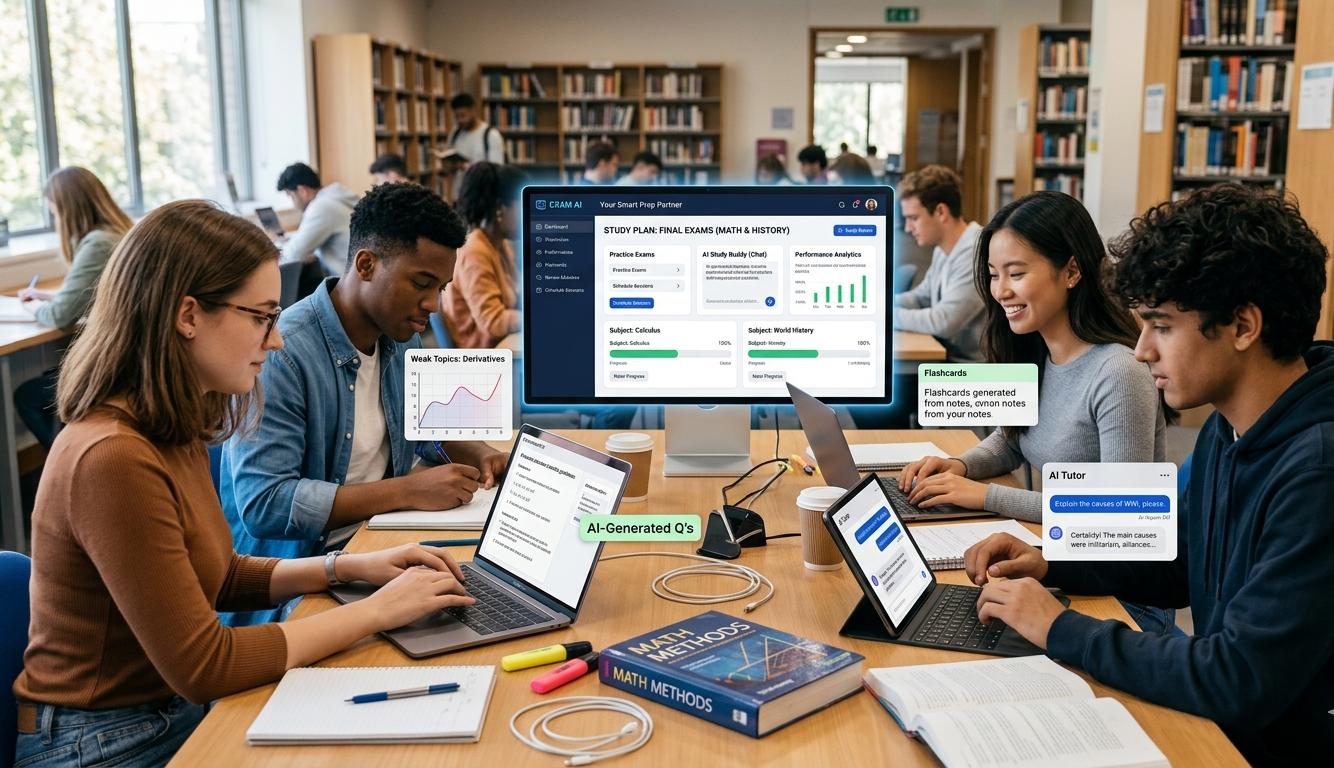
AI tools for exam preparation are designed to make studying more efficient, personalized, and effective. These tools can generate practice questions, create study plans, summarize notes, explain complex concepts, provide instant feedback, and even simulate real exam environments.
By leveraging machine learning and natural language processing, AI-powered platforms help students focus on areas that need improvement while maximizing study productivity.
In this comprehensive guide, we will explore how AI tools are changing exam preparation, their benefits, limitations, best practices, and the future of AI-assisted learning.
What Are AI Tools for Exam Preparation?
AI tools for exam preparation are software applications that use artificial intelligence to assist students in studying and improving academic performance.
These tools can:
- Generate quizzes and tests
- Summarize study materials
- Create flashcards
- Explain difficult topics
- Track learning progress
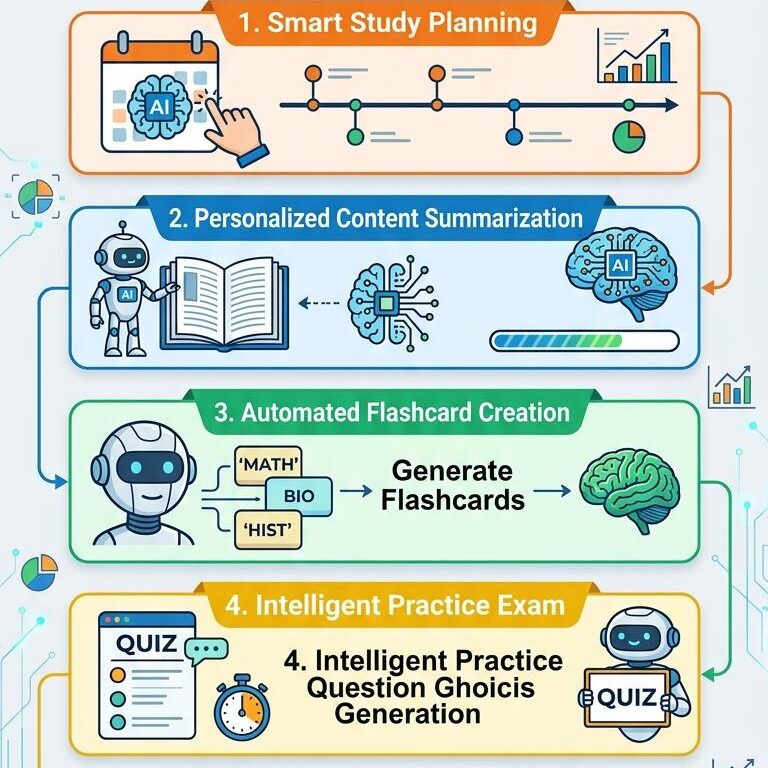
- Recommend personalized study plans
- Provide instant feedback
- Identify knowledge gaps
Unlike traditional study methods, AI tools adapt to individual learning styles and help students study smarter rather than harder.
Why Students Are Using AI for Exam Preparation
The popularity of AI-powered study tools continues to grow because they solve many common academic challenges.
- Information Overload
- Students often have hundreds of pages of notes and textbooks to review. AI can summarize large amounts of content quickly.
- Personalized Learning
- Every student learns differently. AI analyzes performance and provides customized recommendations.
- Time Efficiency
- AI automates repetitive study tasks, allowing students to focus on learning.
- Immediate Assistance
- Students receive instant answers and explanations instead of waiting for teacher support.
- Better Retention
- Interactive quizzes and spaced repetition improve memory retention.
How AI Tools Work
AI exam preparation tools combine several technologies.
Machine Learning
Machine learning algorithms analyze study patterns and performance data.
The system learns:
- Strengths
- Weaknesses
- Study habits
- Learning preferences
Natural Language Processing (NLP)
NLP allows AI to understand and explain human language.
This helps with:
- Answering questions
- Summarizing notes
- Explaining concepts
- Creating study guides
Adaptive Learning
AI continuously adjusts learning materials based on student progress.
Students receive targeted practice where improvement is needed most.
Benefits of AI Tools for Exam Preparation
AI offers numerous advantages for students preparing for exams.
1. Personalized Study Plans
AI can create customized schedules based on:
- Exam dates
- Learning speed
- Subject difficulty
- Available study time
This helps students stay organized and avoid last-minute cramming.
2. Faster Learning
AI simplifies difficult concepts and presents information in easy-to-understand formats.
Students can learn more efficiently and save valuable time.
3. Improved Memory Retention
Many AI tools use spaced repetition techniques.
This method reviews information at optimal intervals, helping students remember concepts longer.
4. Instant Feedback
Students receive immediate corrections and explanations when answering questions incorrectly.
This accelerates learning and prevents repeated mistakes.
5. Reduced Stress
Organized study plans and targeted learning reduce anxiety before exams.
AI-Powered Study Features
Modern AI learning platforms offer many powerful features.
Smart Summaries
AI condenses lengthy textbooks, articles, and notes into concise summaries.
Benefits include:
- Faster revision
- Improved understanding
- Better focus on key concepts
Flashcard Generation
Students can automatically generate flashcards from notes and study materials.
These flashcards improve active recall and memory retention.
Quiz Creation
AI can generate:
- Multiple-choice questions
- True/false questions
- Short-answer questions
- Practice exams
This allows students to test their understanding regularly.
Concept Explanation
AI tutors explain difficult topics using simple language and examples.
Students can ask follow-up questions for deeper understanding.
Progress Tracking
Many platforms provide analytics showing:
- Study time
- Performance trends
- Weak areas
- Improvement rates
AI Tools for Different Types of Exams
AI supports preparation for a wide range of examinations.
School Exams
Students can use AI for:
- Homework assistance
- Revision planning
- Practice questions
- Subject explanations
University Entrance Exams
AI helps with:
- Mock tests
- Performance analysis
- Personalized learning paths
Professional Certifications
Certification candidates can prepare more efficiently through targeted practice and study recommendations.
Language Exams
AI tools assist with:
- Grammar practice
- Vocabulary building
- Speaking exercises
- Writing feedback
Competitive Exams
Students preparing for highly competitive exams can benefit from adaptive practice and performance monitoring.
AI Tools for Subject-Specific Learning
Different subjects require different learning approaches.
Mathematics
AI can:
- Solve equations
- Explain steps
- Generate practice problems
- Identify common mistakes
Science
Students can receive:
- Visual explanations
- Concept breakdowns
- Interactive quizzes
- Lab-related learning support
History
- AI helps summarize historical events, timelines, and important facts.
Literature
- Students can analyze texts, themes, characters, and literary techniques.
Languages
- AI supports vocabulary learning, pronunciation improvement, grammar correction, and writing practice.
How AI Improves Time Management
Time management is one of the biggest challenges during exam preparation.
AI helps students by:
- Creating Study Schedules
- AI generates realistic study plans based on available time and exam priorities.
- Prioritizing Topics
- The system identifies high-priority areas that require more attention.
- Reducing Wasted Time
- Students spend less time organizing materials and more time learning.
- Tracking Productivity
- AI monitors study habits and suggests improvements.
AI and Adaptive Learning
Adaptive learning is one of AI’s most powerful educational applications.
Traditional learning treats all students the same.
AI adapts by:
- Monitoring performance
- Identifying weaknesses
- Adjusting difficulty levels
- Providing targeted practice
This creates a personalized learning experience that improves outcomes.
For example, if a student struggles with algebra but excels in geometry, AI will recommend more algebra exercises while reducing unnecessary geometry practice.
Challenges and Limitations of AI Exam Tools
Despite their advantages, AI tools have some limitations.
- Accuracy Issues
- AI may occasionally provide incorrect answers or explanations.
- Students should verify important information.
- Dependence on Technology
- Overreliance on AI can reduce independent problem-solving skills.
- Internet Requirements
- Many AI platforms require internet access for advanced features.
- Subscription Costs
- Some premium tools can be expensive for students.
- Limited Human Understanding
- AI cannot fully replace teachers, mentors, or classroom discussions.
Best Practices for Using AI in Exam Preparation
To achieve the best results, students should use AI responsibly.
- Combine AI with Traditional Learning
- Use textbooks, classroom notes, and teacher guidance alongside AI tools.
- Verify Information
- Double-check important facts and calculations.
- Focus on Understanding
- Avoid memorizing AI-generated answers without understanding the concepts.
- Practice Regularly
- Consistent study sessions are more effective than last-minute cramming.
- Use AI as a Learning Assistant
- AI should support your education rather than replace active learning.
AI vs Traditional Study Methods
| Feature | Traditional Study | AI-Powered Study |
| Personalization | Limited | Highly Personalized |
| Feedback Speed | Delayed | Instant |
| Study Planning | Manual | Automated |
| Progress Tracking | Difficult | Automated |
| Accessibility | Limited Hours | Available 24/7 |
| Practice Generation | Manual | Automatic |
The best approach often combines both methods for maximum effectiveness.
The Future of AI in Exam Preparation
AI technology continues to evolve rapidly.
Future advancements may include:
- Virtual AI Tutors
- Students may have access to highly personalized AI tutors available around the clock.
- Real-Time Learning Assistance
- AI could provide immediate support during study sessions through voice and visual interaction.
- Predictive Performance Analysis
- Future systems may predict exam scores and recommend targeted interventions.
- Immersive Learning Experiences
- Virtual reality and AI could create interactive educational environments.
- Smarter Adaptive Learning
- AI will become even better at understanding individual learning styles and educational needs.
Choosing the Right AI Exam Preparation Tool
When selecting an AI study tool, consider the following factors:
- Subject Support
- Ensure the platform supports your exam subjects.
- Practice Features
- Look for quizzes, flashcards, and mock exams.
- User Experience
- Choose tools with simple and intuitive interfaces.
- Cost
- Compare free and paid options.
- Accuracy
- Use reputable platforms known for reliable educational content.
- Progress Tracking
- Detailed analytics can help monitor improvement over time.
Frequently Asked Questions (FAQs)
1. What are AI tools for exam preparation?
AI tools for exam preparation are software applications that help students study using personalized learning, quizzes, summaries, flashcards, and performance analysis.
2. Can AI improve exam scores?
AI can help improve performance by identifying weaknesses, providing targeted practice, and creating efficient study plans.
3. Are AI study tools suitable for all subjects?
Yes. AI tools support mathematics, science, languages, history, literature, business studies, and many other subjects.
4. Can AI generate practice tests?
Yes. Many AI platforms automatically create quizzes, mock exams, and practice questions.
5. Is AI better than traditional studying?
AI enhances traditional studying but should not completely replace textbooks, teachers, and active learning.
6. Can AI explain difficult concepts?
Yes. AI tutors can break down complex topics into simpler explanations and examples.
7. Are AI study tools free?
Many platforms offer free versions, while advanced features may require paid subscriptions.
8. How does AI create personalized study plans?
AI analyzes exam dates, learning speed, strengths, weaknesses, and study habits to generate customized schedules.
9. Can AI help reduce exam stress?
Yes. Better organization, targeted learning, and structured study plans can reduce anxiety and improve confidence.
10. What is the future of AI in education?
The future includes smarter virtual tutors, predictive analytics, adaptive learning systems, immersive learning environments, and highly personalized educational experiences.
Conclusion
AI tools for exam preparation are revolutionizing education by making studying more personalized, efficient, and engaging. From generating quizzes and flashcards to creating customized study plans and providing instant feedback, these tools help students maximize learning outcomes while reducing stress.
Although AI cannot replace teachers or the value of independent thinking, it serves as a powerful learning assistant that enhances traditional study methods. Students who use AI responsibly can improve productivity, strengthen understanding, and prepare more effectively for exams.
As artificial intelligence continues to advance, the future of exam preparation will become increasingly personalized, adaptive, and accessible, helping learners achieve their academic goals more efficiently than ever before.